
DrWho42
-
Content Count
5,211 -
Joined
-
Last visited
Posts posted by DrWho42
-
-
Enid.


-
Great looking banner, Wishfire!
 :cool1:
 -
.:10.3 posts per day / 1.15% of total forum posts.
Used to be higher though...
-
Her name was: T'Pring.Spock's betrothed from TOS (name???)Click For Spoiler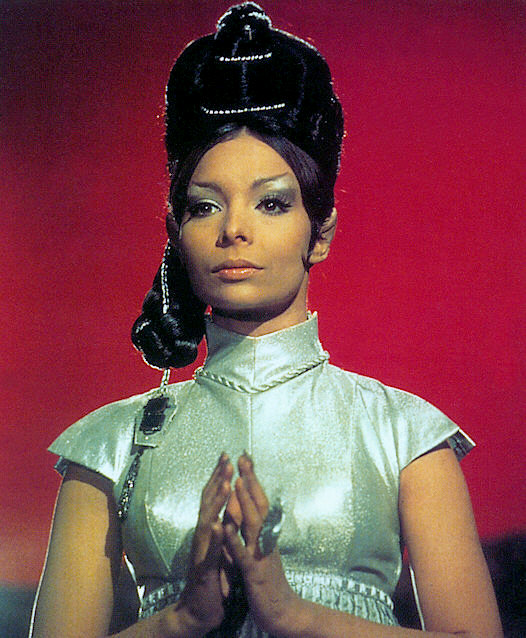
-
Rewatching “The Adventures of Buckaroo Banzai: Across the Eighth Dimension”...

..Again.
-
*thwacks people with a silver hammer because he's Maxwell Edison...*
-
Particularly happy with my new banner
, and thinking about which Twilight Zone episode to watch for today... I may update my Xanga also, though I can't really think of something to post.. -
-
Found a site with a list of some definitions pertaining unto the genres within “steam-punk”...:cool1: Some of this genre can be also called "Alternative History"...Here's the definition if that should help more...
 :flex:
  Click For Spoiler• What the heck is this page?
Why, its a page for Steampunk, Scientific Romance, Imperialist Adventure, Voyages Extraordinaires, Gothic horror, silent film, Victoriana and Neo-Victorian enthusiasts. This enthusiasm may take the form of novels, movies, comics, TV series', role-playing games, anime and manga, and any other form of entertainment.
• What is Steampunk?
Generically, the term Steampunk is used to include fictional works from the genres of Victorian-Edwardian Science Romance, Gothic horror, Steampunk, Imperialist Adventure, Voyages Extraordinaires and Edisonades.
Specifically, Steampunk is a relatively new genre within Science Fiction set upon imitation or critique of the style, technology, characters and/or themes of Scientific Romance, Imperialist Adventure, Edisonades and Voyages Extraordinaires, often with the inclusion of Gothic horror elements.
There are actually 2 sub-genres of Steampunk: Historical Steampunk, and Fantasy Steampunk.
Recently, Steampunk has begun diversifying out from a genre of Science Fiction to a genuine sub-culture. How this is translation from literature to lifestyle can occur is a subject of ambiguity and debate, but most often it includes interest in Victoriana and Neo-Victorianism.
• What is Historical Steampunk?
Historical Steampunk is any work of Science Fiction that satisfies the requirements of Steampunk while being set at some point in Earth's history. This is commonly known as the "alternative history" genre.
Historical Steampunk can then be divided up into further sub-genres, including Victorian Steampunk, Western Steampunk and Mediaeval Steampunk.
• What is Victorian Steampunk?
Victorian Steampunk is any work of modern Science Fiction that satisfies the requirements of Steampunk and is set in the “Long Victorian” period, roughly from the beginning of the Industrial Revolution through the end of the Edwardian era.
Examples include Dinotopia by James Gurney, The League of Extraordinary Gentlemen comic, and The Difference Engine by Willam Gibson and Bruce Sterling.
• What is Western Steampunk?
Western Steampunk is any work of modern Science Fiction that satisfies the requirements of Steampunk and set in the "wild west" period of North American history or in another setting comparable to the “wild west”.
Examples include Wild Wild West starring Will Smith and Kevin Kline.
• What is Mediaeval Steampunk?
Mediaeval Steampunk is any work of Science Fiction which satisfies the requirements of Steampunk while being set in the Middle Ages (The Fall of Rome to the Renaissance).
Examples include A Connecticut Yankee in King Arthur's Court by Mark Twain.
• What is Fantasy Steampunk?
Fantasy Steampunk is any work of Fantasy fiction which satisfies the requirements of Steampunk, mixing magic and steam power.
Examples include the Castle Falkenstein role-playing game, the anime Escaflowne, and the computer game Arcanum.
• What is Scientific Romance?
Science Romance is the name attributed to the pioneer Science Fiction produced in the Victorian (1837-1901) and Edwardian (1901-1912/1914) eras. It includes the work of H.G.Wells, Jules Verne, and Edgar Rice Burroughs.
• What is Gothic horror?
Gothic horror is a style of horror literature which features antique settings (frequently Gothic castles, cathedrals and ruins, from which the name of the literary genre was derived), isolation, family curses, insanity, incest, and often supernatural occurrences and creatures such as ghosts or vampires. The genre actually began in the early 1700s and peaked in 1800, but was in revival in the late Victorian era.
The two best known Gothic novels are Frankenstein by Mary Shelly (an original Gothic novel) and Dracula by Bram Stoker (a Gothic Revival novel).
• What is Imperialist Adventure?
Imperialist Adventures are those Victorian-Edwardian novels which feature usually British explorers and colonialists going to far-flung, exotic, and dangerous locales in search of any variation or combination of treasure, expanded colonialism, lost civilizations and races, and extinct wildlife. These stories routinely lack fantastic technologies, opting instead for the virtues of the Great White Hunters to see them through.
Examples include Conan Doyle's The Lost World, H.Rider Haggard's King Solomon's Mines, and the works of Rudyard Kipling.
• What is Voyages Extraordinaires?
Voyages Extraordinaires is less of a genre than an attitude taken to Scientific Romance, Imperialist Adventure and even Steampunk stories. Originally the designation was used for the works of Jules Verne, both fiction and non-fiction, and is now applied to any period story where the emphasis is on exploration and extraordinary or fantastic voyages to impossible or heretofore unvisited places. Sometimes these may include overtly Steampunk elements, like 20,000 Leagues Under the Sea and From the Earth to the Moon, and other times they may not, like Around the World in 80 Days and Journey to the Centre of the Earth.
• What are Edisonades?
Edisonades, named for inventor Thomas Edison, are an American equivalent to the Imperialist Adventure. The hero of an Edisonade is usually a young male who invents some fantastic weapon and/or transportation device which allows him to explore some territorial frontier, overcome obstacles (which usually include non-white races) and make his fame and fortune, exemplifying 19th century American virtues of ingenuity and entrepreneurialism. Steampunk technologies play an essential part in these stories, while they are generally absent in Imperialist Adventures and optional in Voyages Extraordinaires.
Examples include the Franke Reade series of penny dreadfuls.
• What are silent films?
Silent films are all movies made prior to 1930/31, afterwhich soundtracks could be added to film.
• What are anime and manga?
Anime is the name given to Japanese cartoons, manga the name given to Japanese comics. Though cartoons and comics, anime and manga cover material aimed at widely differing age groups and interests. In Japan, cartoons and comics are understood as a medium, not a genre (when you think of cartoons, do you think of Disney?).
• What are role-playing games?
Role-playing games (aka: RPGs) are a kind of game in which you create a character to play in an imaginary world (either fantasy, science fiction, or a version of this world; encompassing any genre from swords and sorcery to James Bond and Indiana Jones) described and governed by a "game master" (the person running the game) and rolls of dice. The game is usually played by people sitting around a table with a bunch of paper and dice in front of them describing what their character does, and the game master replying with what happened. These people are from all walks of life, and a good 99.999999% are not Satanists who drink blood, summon demons, or rape and eat children. Dungeons and Dragons is probably the most well known (abiet misunderstood) RPG ever.
• What is Victoriana?
Victoriana is anything - trinkets and souvenirs, art and architecture, crafts and manufactured goods - which are from or recall the style of the Victorian era and it's aesthetic values.
• What is Neo-Victoriana?
Neo-Victorianism is a recent aesthetic movement which attempts to fuse Victorian style with modern aesthetic values and technologies. Examples might include Victorian-style cordless phones, Victorian suits and dresses accented with Gothic or Rivet style, CD-players that resemble old time radios, or furniture with Victorian design elements.
• Who created Steampunk?
There are roughly three main theories about the origin of Steampunk, none of which actually contradict the others.
The first is that Steampunk was essentially created when Walt Disney released his live film adaptation of 20,000 Leagues Under the Sea. Though made in the 1950s, the film intentionally retained its Victorian setting and Vernian inventions, as well as retro-recreating modern technologies like atomic power.
In 1979, K.W. Jeter released the novel Morlock Night, being a modern sequel to H.G. Wells' The Time Machine, which is regarded as the first Steampunk novel according to the second theory.
The third cites The Difference Engine by William Gibson and Bruce Sterling. Both writers received acclaim as Cyberpunk authors, and transposed their dystopian visions onto a Victorian past where analog mechanical computers were actually built. Steampunk acquired it's name by playing with the term Cyberpunk. The following page provides an etymology and earliest citation for the term "Steampunk":
http://www.wordspy.com/words/steampunk.asp.• What is Steampunk's relationship to Cyberpunk then?
The resolution to this question usually depends on the source one is reading. The more widely held idea, which I hold to myself, is that Steampunk comes mostly from Cyberpunk roots but has branched out so that Cyberpunk-type stories are only one facet of Steampunk. The Scientific Romance side of Steampunk is generally more popular and accessible, and so it tends to eclipse the strict Cyberpunk view. This strictness would be the opposite view, where Steampunk is itself a subgenre of Cyberpunk, and should be limited to include only those darker and dystopian Cyberpunk-type stories.
• Is there anything between Mediaeval Steampunk and Victorian/Western Steampunk?
As a matter of fact, there is. Sailpunk, which could alternately be known as Clockwork Punk or Renaissance Steampunk, occupies the time from the Renaissance through the Reformation and Baroque periods to the Enlightenment... A period in history known as the Early Modern era. The Early Modern era would see the work of Leonardo DaVinci and the creation of the Guttenberg Press. The terminology is usually different for Science Fiction of this period because steam was not a major power source. The lighter designs of clockwork and DaVinci are more typical. Examples of Sailpunk would include The Adventures of Baron Munchausen directed by Terry Gilliam and the Jack of All Trades TV series starring Bruce Campbell.
-
 I am Jetpac Man.
I love the outdoors; the sense of freedom, of adventure. I love the sensation of free-fall, and would parachute and bungee jump on a moment's notice. I know where I want to be, and I strive to get there, making great effort to collect what I need. I let nothing stand in my way.
(If you were not Jetpac Man you would be Pacman.)
 I am Pacman.
I am an aggressive sort of personality, out to get what I can, when I can. I prefer to avoid confrontation, but sometimes when it's called for, I can be a powerful character. I tend to be afflicted with munchies constantly.
I feel my hat answers are more accurate...Click For Spoiler I am a Beret.
I am an art-house artist. I do things in unusual ways; if I were to make a movie, it would be notably 'independent'. If I were to make music, it would be 'experimental'. I may sometimes seem pretentious, but it's not a pretence.
(If you were not a Beret you would be a Top-hat.)
 I am a Top-hat.
I'm a bit of a jack-of-all-trades; creative, in a stylistic sort of way, a little vain, a little dark, perhaps a little archaic. I get on alright with people, but I can take them or leave them.
-
I prefer Xanga, and I just use my LiveJournal account to respond to other people's LiveJournals or LiveJournal Groups.
-
Wow... This is a title..

“Borg in Space”.
“Proximity alert, 5 of 9!”
*EHEM* Lost in Space reference. :blink:
-
Those were great films.

Though, I have only seen the 2002-version of “Solaris”. :blink:
But I've seen the other films, like the French science-fiction “Alphaville”
 .
. -
Actually...raven\Ra"ven\, n. [AS. hr[ae]fn; akin to raaf, G. rabe, OHG. hraban, Icel. hrafn, Dan. ravn, and perhaps to L. corvus, Gr. ?. ???.] (Zo["o]l.) A large black passerine bird (
Corvus corax), similar to the crow, but larger. It is native of the northern part of Europe, Asia and America, and is noted for its sagacity.
Sea raven (Zo["o]l.), the cormorant.Source: Webster's Revised Unabridged Dictionary, © 1996, 1998 MICRA, Inc.
-
A raven, and maybe some other creatures.... But I know I want a raven.
-
The Beatles — Maxwell's Silver Hammer
Click For SpoilerJoan was quizzical, studied pataphysicalScience in the home
Late nights all alone with a test tube
Oh, oh, oh, oh
Maxwell Edison, majoring in medicine
Calls her on the phone
“Can I take you out to the pictures Jo-o-o-oan?”
But as she's getting ready to go
A knock comes on the door
Bang! Bang! Maxwell's silver hammer
came down upon her head
Clang! Clang! Maxwell's silver hammer
made sure that she was dead
Back in school again, Maxwell plays the fool again
Teacher gets annoyed
Wishing to avoid an unpleasant scene-e-e-ene
She tells Max to stay when the class has gone away
So he waits behind
Writing fifty times “I must not be so-o-o-oo...”
But when she turns her back on the boy
He creeps up from behind
Bang! Bang! Maxwell's silver hammer
came down upon her head
Clang! Clang! Maxwell's silver hammer
made sure that she was dead
P.C. Thirty-One said: “We've caught a dirty one.”
Maxwell stands alone
Painting testimonial pictures, ohh-oh-oh-oh
Rose and Valerie screaming from the gallery:
“Say he must go free.”
The judge does not agree, and he tells them so-o-o-oo
But, as the words are leaving his lips
A noise comes form behind
Bang! Bang! Maxwell's silver hammer
came down upon his head
Clang! Clang! Maxwell's silver hammer
made sure that he was dead
Silver hammer man.
-
Here is the front page news for:
Thursday, October 22, 2015.
Click For Spoiler Click For Spoiler
 Click For Spoiler
-
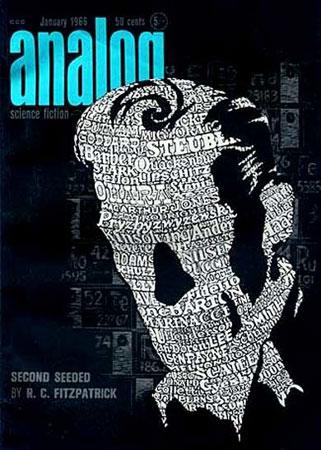
Going through a Back to the Future script.

-
-
Click For SpoilerYou would have to keep in mind that the Eugenics Wars took place between the years of 1992 and 1996. And according to TOS, we did have that technology.Just as they have said Nomad was launched in 2002, and et cetera. :cool1:
Frankly, it seems canon to me.
-
-
-
-


~ How Many New Threads Have You Started? ~
in The Cotton Candy Factory
Posted
155 threads, so far...
Been a member since 11 January 2004 A.D.
